Friday, February 7, 2014

PHILIP SEYMOUR HOFFMAN, KING OF THE UNCOOL

Before Super Bowl XLVIII turned out to be not so super, there was already a considerably gloomy cloud hanging over anyone that appreciates the power of art on Sunday. The actor Philip Seymour Hoffman was found dead, at 46, of an apparent heroin overdose in his Greenwich Village office. It's with performers like Hoffman, who seemed to repel the very existence of the term "typecast", that you not only realize you took his gargantuan talent for granted, but that you didn't even recognize him as a fellow member of your own species. When an actor delivers paramount material time after time, again and again, we tend to slice through everything else that makes him/her a real person (flaws, hobbies, interests) until they're automatons built for one function, performance. That they're powered down at the end of the shooting day. So, to hear that a giant of his form, a master of his craft, fell in such an unmighty way, shatters the lie we all tell ourselves: that famous people only exist to us as we project them to exist. That is to say what I briefly "knew" about his personal life: devoted father and partner, artistic director for local theater, a regular New Yorker, doesn't seem to be attributes of the same guy that left this world with a needle in his arm.

Pointless inquiries arise: How did a guy like Hoffman know heroin dealers? Heroin was his drug of choice? Heroin?? There's nothing to be done now, but it's difficult not to ponder how his commitment to diving deep into a character's painful world didn't have an impact on his real emotional state. How it was a release for him, but left him so drained that a crutch seemed more and more appealing, even necessary. It's been written by people who knew him that he was unbearably hard on himself, researching and experimenting endlessly on his subject. That effort yielded astonishing results. Greatness just came with the package, it wasn't that you were disappointed when he wasn't great, because it never happened. Perhaps the spoils we received watching him and the mountainous standards we held for him felt invisible because he put all of it on his back. That the output of the art was always more important than the endurance needed to maintain the illusion of effortlessness. That generosity seeped through the screen.

I can't speak for his heralded stage work or Capote or Happiness or Before The Devil Knows You're Dead, but from what I have seen of his work, I can comfortably estimate that he was one of the most innately talented working screen actors, Daniel Day-Lewis and Joaquin Phoenix, and maybe Leonardo DiCaprio, are the other ones in his weight class. To say he had no vanity as a performer would be nonviable, because he didn't have a lot of vanity to flaunt. He was rotund, had a giant head, freckled skin that looked dried out by the sun, thin lips that stretched too far across his face, and a receding flop of hair that was chameleonic in its shades of fire-red, yellow, and white. His amorphous shape seemed to coincide with his flexibility as contributor to an entire puzzle, assuming whatever form was needed to fit. Often he would be a small piece, a one-and-done scene stealer, but his screen time in those pictures was disparate from the burn he sizzled in your memory. I think of his prah-per speaking Brandt nervously chuckling as The Dude gazes foggily at the Little Lebowski Urban Achievers portrait in The Big Lebowski, the spoiled silver-spooner Freddie calling out Ripley on his peeping in The Talented Mr. Ripley, the delusional former child star or anarchic villain of otherwise forgettable blockbusters Along Came Polly and Mission Impossible III, and his high-minded rock critic Lester Bangs in Almost Famous. His "uncool" speech in that film has been diluted by people who throw that quote around too much, and ironically, but not surprisingly, have never felt uncool themselves. But it speaks to Hoffman's delivery of those lines, he made being an unsocial, polarizing, loudmouth critic seem like a sympathetic, misunderstood intellectual. He made the uncool cool. You sense that Paul Thomas Anderson, who had Hoffman in five of his films, not only admired him but craved his inspiration on set to get his own creative juices flowing. Hoffman repeated lines in all of Anderson's movies ("fun, Fun, Fun!", "I'm a fucking idiot", "SHUT SHUT SHUT SHUT", "Say your name, say it again, say it again"), and those mantras seem now like Hoffman revving his engine, warming up his acting muscles, accelerating into higher and higher RPMs. A big theme of Anderson's films is family, and Hoffman was almost always the one you'd respond to like a family member. You want to send Scotty a mixtape of break-up songs when he gets rejected by Dirk in Boogie Nights, you want to set his saintly Phil Parma from Magnolia up on a date, you want to party with his obnoxious craps player from Hard Eight for a night like an estranged cousin and then not see him again for a couple years. In light of his death and the correlation of his stringent work ethic of giving everything to a performance, I suspect two of his lead roles in Synecdoche, New York and The Master will have the longest legs when looking back on his career years from now because they both are about the suffering that comes with being the creator of something, and I suspect people will not be able to watch them the same way now. Synecdoche reveals the endlessness of the process, how even when something's finished, the artist is never fully satisfied. The Master hits really close to home because it dives into how hard it is to keep up an act when you no longer believe the truth of it, and why substances (in the film, Joaquin Phoenix's paint thinner cocktail) are so dangerous because they make the job so much easier. Although the latter is one of the most gigantic, magnetizing performances of the past ten years, Hoffman seemed okay with being overshadowed by others in the ensemble. Two of the most underrated performances of recent times were Hoffman's in Moneyball and The Ides of March. Other performances were more celebrated in those films, but Hoffman's collaborative gift had a sizable effect on elevating his costars to the podium of public debate. It's no shock that this selflessness was why he was so adorned by his peers.

Selfishly, the first thought that crept into my mind Sunday was "Man, no more great Hoffman performances." Someone who does not conform to the movie-star life cycle, which he didn't, also can't be applicable to any age limit for expiration of watchability. As brilliant as he was, I'm surely not the only one to think the best was still to come from him. Still, the sadness I, and many others feel, about what could have been is entangled with tremendous gratitude of what he did leave us, and what he left us is magic. He mattered. And his art will never stop mattering.

-Rex

Wednesday, February 5, 2014

REX'S TOP 10 FIILMS OF 2013

I LISTED MY TOP 10 BRIEFLY IN MY OSCAR POST. I'LL DIG A LITTLE DEEPER INTO EACH ONE NOW. THE LIST:

Honorable Mention:
The Place Beyond The Pines, Mud, This Is The End, The Bling Ring, Pacific Rim, The Conjuring, Lee Daniels' The Butler, Star Trek Into Darkness, Much Ado About Nothing, Short Term 12, Prisoners, Rush, Enough Said, The Counselor, All Is Lost, The Hunger Games: Catching Fire, Upstream Color

High Honorable Mention:
16. Stories We Tell
15. Blue Jasmine
14. Captain Phillips
13. Nebraska
12. Frances Ha
11. Drinking Buddies

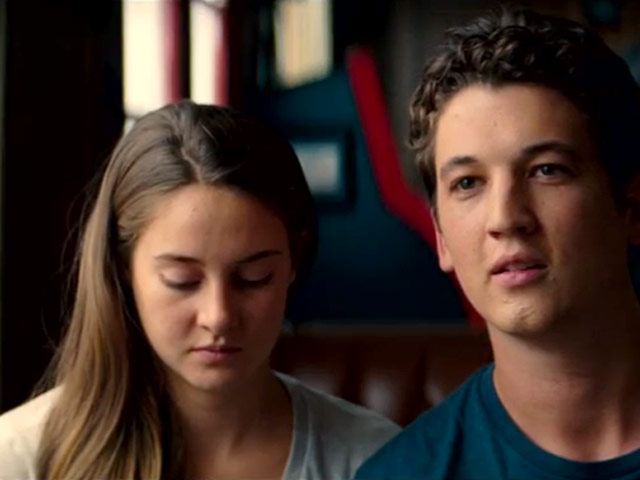
10. The Spectacular Now- While most of us are glad that the high school days are long gone, it is one of the easiest periods in life to romanticize about: little to no responsibility and the wild college days are still ahead. It's also often a checking point which you refer back to with regret or, at least, curiosity: "If I had done that one thing differently, my life might look like this instead, I might be this person instead...". The Spectacular Now examines the denial of graduation for one teenager who genuinely loves high school or at least this time in his life and the people in it. Miles Teller's, in a star-making turn reminiscent in look and spirit of John Cusack in Say Anything, character revels in being the life of the party, and living in the moment, not giving a damn about the future. He's in danger of being the guy who goes nowhere and will wonder where ten years went, until he starts seeing a tender, innocent bookworm (Shailene Woodley), and starts to realize that being "the man" won't matter when all his worshippers move on to bigger and better things. Teller's charisma, and his chemistry with Woodley, carry the story, and the naturalistic feel for high school life and first "love" will most certainly return some nostalgic feelings about that spectacular then.

9. Her- A brilliantly conceived vision of a near-future L.A. in which a lonely writer falls in love with his operating system, Spike Jonze's Her is touching, funny, and insightful about our own relationship with technology. One facet I particularly enjoyed was the look of L.A.: endless skyscrapers, speed-shuttles to the beach, serious over-population problems, how an entire indoor mall seems to have been built around the main character's apartment building entrance. Yet none of it is mentioned, the cityscape is just background noise, because as seen in one haunting sequence, the only progress we appreciate is happening in our phone screens. To paraphrase the famous gospel song, We've got our whole world in our hands. Another thing Jonze executes flawlessly is relational interactions between man and woman, whether it be a blind date or a brutal breakup. What Joaquin Phoenix and Rooney Mara exert during their marital dissolution flashback, without any sound, is scarily authentic. And what Olivia Wilde manages to show, not tell, us about her character's past dating life in only one disastrous scene is remarkable. Phoenix and Amy Adams flaunt their sensitive side beautifully, two damaged characters who couldn't be more different than the ones they played in The Master. This movie sticks with you because of how personal it feels, many estimate this is Jonze's answer to ex-wife Sofia Coppola's Lost in Translation, another story involving a failing marriage. It is not as enjoyable a movie experience as others on this list because of the sad sack nature of Phoenix's character, but it should be endured for being a meticulously crafted artistic endeavor. The real discovery here is the invisible Scarlett Johanssen as the OS, Samantha. Yes, she's been one of the biggest movie stars for some time, but her moneymaker may not be her curves, it may be her sultry pipes.

8. The Act of Killing- Certainly one of the most searing documentaries I've ever seen, The Act of Killing delves into the evil that lawlessness breeds, and the emotional toil that plagues those who committed heinous crimes. Director Joshua Oppenheimer invites Anwar Congo, leader of a paramilitary organization in Sumatra in the 1960's, personally responsible for at least 1,000 deaths, to re-enact his killings in a film production. The elderly Congo coasts the streets merrily with his right-hand man, Herman Koto, boasting about strangling people with wire in a courtyard, and how they always got away with it. The scary thing is that Congo is not threatening, he's more jovial, a magnetic camera presence, and loves referencing American crime movies, many of which inspired their performances as themselves in the re-created film. But as the re-creations are being filmed, and Congo is forced to relive his crimes, you see a killer confronted with his sins for the first time. A scene at the end positions Congo in front of a TV to watch his scene as one of his former victims (pictured above), and his guilt-ridden response results in one of the most powerful scenes I saw last year. Oppenheimer is a director to watch, as his hallucinatory settings look like a Hollywood production, and coincide with Congo's real nightmares, which probably will haunt him for years to come.

7. Side Effects- My full review of Steven Soderbergh's icy, Hitchcockian sexual thriller can be found here.


6. American Hustle- David O. Russell gets the ol' gang back together for this loose adaptation of the 70's ABSCAM scandal. All-American girl Amy Adams bares a lot of cleavage and is riveting in her sexiest role yet. She has three or four scenes in the first half of the film that are jaw-dropping in their command and seductiveness. Her chemistry with Bradley Cooper's doofus FBI agent is scalding, and provides some priceless comedic payoffs. Cooper has never been better as a libidinal man-boy. Christian Bale as the neurotic frontman, Jennifer Lawrence as the unstable possessive housewife, and Jeremy Renner as the honorable mayor all are memorable. That is the gift of Russell, The Actor's Director, whose films have a very loose, improvisatory feel which provides for some preposterous dialogues that generate tremendous wacky energy. Some may say that the narrative goes wayward and that, by the end, they feel they just left a mess. I believe this is Russell's purpose, and I adore the mess. The only thing that bugged me was the Goodfellas-ripoff attempt with the narration, which he gives up on halfway through, and the quick Scorsese-like zoom-ins, which he attempted at inopportune moments or line readings, and frankly after seeing the actual Scorsese movie this year, just don't look as crisp as the real thing. Hustle is an acting showcase, and the different things he tried with the camera last year in Silver Linings Playbook had a much more substantial impact on that film's success. Nonetheless, this was one of the most fun watches last year. It hits its peak about halfway through at Studio 54, culminating in Adams' party-girl howl to a bathroom ceiling. The result is the most euphoric two minutes I spent in a theater in 2013.

5. Gravity- We should all be grateful to director Alfonso Cuaron's patience, who imagined the film's concept years ago but had to wait until the technology was far enough along to start shooting. The work of art is one of the most transcendent cinema experiences I've ever had. Starting with a 13-minute long tracking shot that revolves and floats and dips with these astronauts repairing their ship as they orbit around Earth, I knew that this was unlike anything I'd ever seen. The end of that single sequence, with Sandra Bullock's character floating away into nothingness, is one of the most majestic images in all of science fiction cinema. George Clooney is his usual presidential self as the veteran astronaut, but this is Bullock's show. Her fear and lonesomeness is what much of the movie relies on, and Bullock's empathy makes her astronaut the latest in a long line of great action heroines. If you haven't seen it yet, then I urge you to find a theater it's playing, because a TV viewing will not do it justice. If ever there was a movie that demanded the biggest of screens, it's this one.

4. Inside Llewyn Davis- Surviving the wintry New York is brutal when you don't have a coat or a permanent residence. Such is the life of folk singer Llewyn Davis, resident couch surfer, who makes whatever he can scrap together from community baskets at coffee lounges where he plays. Llewyn's musical partner just recently killed himself, and now the sidekick has to find a way to survive as a solo man. Like many of the Coen Brothers' protagonists, Llewyn's downward spiral is the spine of the film. He isolates everyone he knows with his innate contempt for others who have any sort of success, his music is rejected time and again for major consideration, and when he eventually tries to get out of the business, he finds himself doomed to play in the Village forever. But Oscar Isaac, with his passionate singing and doggedly defeated eyes, keeps Llewyn in our good graces. The film's about how far you will push when it's clear that there's no longer a place for your artistry. The music is joyous, the look of the dimly lit 1960's Greenwich Village is magical, and the brilliant comedic pitch of the Coen Brothers is ever-present.

3. Spring Breakers- Bodies swaying side to side, middle fingers in the air, crotch grabbing, tit wiggling... these are the monsters that occupy the beaches of St. Petersburg, FL. The monsters are us. An apocalyptic wasteland, the wild, wild south. Director Harmony Korine's cautionary tale of youth and mainstream media is a fever dream of shocking images and chasing the impossible perfect escape fantasy that spring break vacation represents. Four college girls don't have enough money for the trip, so the three baddest ones rob a restaurant, and off they go on a bus down to St. Pete. There they trip, booze, and get lost in Skrillex music mindlessly with other scantily clad strangers. They talk about never leaving, how this place is special. Eventually they get busted, and get bailed out by aspiring rapper/criminal/gangster Alien, decked out in cornrows and gold teeth. James Franco as Alien has never delved deeper into a character, and he is both alluring in his boastfulness and repulsive in his outlook on life. His "Look at my shit" monologue is already carving out a cult corner as a tableau for materialistic delusion. In one of the most visually arresting sequences I've ever seen, the girls march out to Alien's backyard donning pink unicorn-embroidered balaclavas and toting big guns. Alien begins playing the sweet, simple Britney Spears melody "Everytime" on his piano, and the song keeps playing during a slow-mo montage of the masked crew robbing tourists at gunpoint. Korine is deliberate with this notion that the most seemingly innocent sources of entertainment intake can be a gateway to violent, nasty impulses. That's the fascinating thing about Alien, he didn't learn to talk or accessorize like a black rapper through his own tough upbringing or gang run-ins, he probably learned it through TRL. The film has a pace and feel and sound to it that is intoxicating. Between the endless guttural rapture of Skrillex and the neon dreamlike cinematography, it is a total hypnotic sensory intake. Korine has a special interest with his past films in the freaks, low-lifes, the despicable scum of the earth. Despite the painful oddities of his past miscreant creations, his genius as a filmmaker did shine through the scum from time to time. His motor has always been fueled by anarchy, and now that he's focused that gutter art on halfway-normal people with this outing, it feels like he's stopped hitting his head on the wall, and maybe is willing to accept commercial success.

2. The Wolf of Wall Street- Martin Scorsese's operatic farce based on Jordan Belfort's life is a drug-fueled, adrenaline rush through the lives of Wall Street culture in the 1990's, and is also the funniest film of 2013. The work itself seems less important than what is "necessary" to complete the work: endless drugs, hookers, and obscene debauchery. This isn't a Wall Street office, it's a cave in the wilderness full of savages, pounding their chests, yelping tribal calls. Money and greed has turned them primitive. Leonardo DiCaprio's Belfort loves the idolatry his worker bees lay upon him, and his vulgar state-of-the-union pump-up rallies are a raucous vision of endless striving for immorality. DiCaprio, able to let go of his vanity like never before, unleashes a twisted, paranoid messiah that feels like discovering him again for the first time. Terence Winter's brilliant, over-the-top script permits Leo to leave nothing on the field, so to speak. Martin Scorsese, similarly, hasn't felt this vital and reckless in a long time, it's mind-blowing this is a film made by a 71 year old, but Scorsese is, still, not of this planet. Jonah Hill is terrific as Belfort's schlubby, loyal number two, and the newcomer knockout Margot Robbie proves very valuable in later scenes as Belfort's wife when Jordan hits rock bottom. The arguments that Wolf glorifies these guys, and that the filmmakers lack integrity for not showing what happened to the people that got ripped off are thunderously insipid to me. It's as if these critics have never seen a movie about people doing bad things that don't get punished as severely as they deserve to be. The argument I will listen to is that it's long... it is. But for every valley of conversations that drag on too long about midget throwing or teasing someone about their wife, there are sky-high mountains of immaculate writing, directing, editing, and acting. Jonah Hill tripping at the beach house, Jordan acting a fool on the plane to Switzerland, the work speeches, the boat confrontation with Kyle Chandler, the yacht in the storm, the brutal fight at home with the Mrs., and of course the Lemmon quaalude scene, as far as I'm concerned, on the Mt. Rushmore of all-time Scorsese scenes. At the end of the film, Jordan has lost his money, his family, his company, but the last shot reveals the essential component that made the other things attainable in the first place: disciples.

1. 12 Years A Slave- Steve McQueen's harrowing journey into one of the most shameful periods in U.S. history is haunting in its southern imagery and sadism. The true story follows Solomon Northup, a free black man from New York, who is kidnapped and sold into slavery in the south for a dozen years. It is far from an easy watch, and McQueen's relentlessness with the brutality and psychological warfare the slaves deal with everyday borders on excessive. But McQueen's stupendous long takes serve the material so well because it reinforces the idea that any pain and suffering endured is out of the victim's hands, Solomon will hang under a tree all day clinging to life until someone cuts him free. That is how real life is too, you can't just change to a different scene when faced with awkwardness, humiliation, agony. McQueen doesn't grant the audience any slack, and because of that, the whole film is an emotional sledgehammer, enriched by Hans Zimmer's somber violin score. Yet you never feel manipulated to feel an artificial way, the art of the filmmaking transposes all the culturally important ideas to the right places. It's an important watch not because it's the most punishing of films depicting slavery, but because it's one of the most realistic portrayals of human nature, which is that we are engineered to want to live, no matter how miserable our lives have become. Lupita Nyong'o is devastating as the perpetually tortured Patsey, and Michael Fassbender is a complicated, spiritually conflicted beast of a slave master, but it's Chiwetel Ejiofor's solemn and quietly dignified protagonist that makes the nightmare journey through the dozen years so worth it. Of course, since it's not called A Lifetime A Slave, Solomon returns to his family in the end, and the reunion, more or less, detonated my heart. I haven't felt that shell-shocked and overwhelmed walking out of a theater in a long time. It's ultimately a horror movie, but Solomon need not scream bloody murder, the fear and despair is all on display in those big, orbital eyes.

-Rex

@rexman2001

Friday, January 24, 2014

OSCARS 2014: AMPAS, YOU M-M-M-MAKE ME HAPPY

The 86th Oscar nominations were announced by the AMPAS (Academy of Motion Picture Arts & Sciences) last Thursday, and in the other tradition unlike any other (for film enthusiasts, at least), that annual January morning is a second Christmas. The same jitters that jolted me awake at the crack of dawn years ago in my bunk bed on Dec. 25 re-assemble every year for this day, the culmination of my movie-going year. Yes, there is still the awards show itself, but hardly are there ever Cinderella upsets at the Main Event, and if there are, it's only in one category. These days, the winners are set in stone before the nominations are even announced. So, the real excitement for me is who's going to be immortalized (in Hollywood folklore, at least) by getting nominated, not to mention the Oscars are continually finding new pointless ways to drag on the show. Even though the Golden Globes'  voting body, the Hollywood Foreign Press Association, is far less reputable than the Academy, the producers of that show have a flawless execution plan every year: No pauses in between awards for Cirque du Soleil bullshit or interpretive dance of the Original Scores, don't even show clips of the acting: just read the names, and most importantly for entertainment purposes, drown the celebrities in booze: keeps them happy with the hosts and us happy with the slurry speeches. But I digress, this year nomination morning had me buzzing with high hopes for my favorite actor who, in boxing terms, shot up three weight classes with one of his movies (Leo), an actress who I never thought of as more than indie baggage that blew me back in my seat (Sally Hawkins), and also a few performances which were all but locked in as "sure things" (Daniel Bruhl, Robert Redford, Emma Thompson- seriously, can anyone explain the appeal of that Thompson character?) that I hoped would be swiped by some more deserving ones. Now, when you're a 24-year old guy whose tastes range from delicate to obscene and you're relying on more classical and historical tastes of an overwhelmingly elder bunch to make your day, you can expect that only one, maybe two of your ponies are going to pull through. The nomination announcement is akin to being grateful you didn't lose everything at the track, and cut your losses.

I'm happy to report that this year, almost every nook and cranny not occupied by the actual "sure things" was filled by my underdogs. My verbal utterings as the nominees are read off the list in any other year usually range from, "Of course", "Bogus", "Come on..", "Really?". This year, it was closer to "Whoa", "Whoa!", "WHOA!!". I can't remember being more satisfied and genuinely shocked overall than this year. Maybe I cared more since I saw twice as many movies as I had last year, so the performances and directors that really stuck with me I felt I could, and should defend since it seemed like I had seen everything and could definitively say he/she deserved to be a finalist (There's still about 20 movies from this year I haven't seen and feel I need to see...because I'm an addict). But this year, in particular, emits a sentiment that a changing of the guard is beginning to occur inside the Academy: less obligatory nods to flavorless "socially conscious" (and usually mediocre) movies, no nods to big (overrated) comebacks (Redford) and perennial Oscar favorites (Hanks) or just human favorites (Oprah). It represents, perhaps, that we're on the precipice of another new wave of cinema, not because more of the right kinds of movies are getting made and seen, but because this year might be the start of getting back to celebrating the right kinds. That the Oscars might actually mean what they should mean. The urgency to wave new and younger voters into the Academy is a joy to hear because the same old, sentimental, rigid Academy stiffs that have been so predictable the past decade were once the same young guns who got A Clockwork Orange, Taxi Driver, and Dog Day Afternoon nominated. The times they are a changin'. Here's a few random thoughts on the nominations this year:

-One popular narrative is that this was the black year in cinema, and that the Academy was being racist for only including 12 Years A Slave, and completely shutting out Fruitvale Station and Lee Daniels' The Butler. First off, I agree it was a terrific year for films primarily starring and made by African Americans, but to say that voters are racist for not including the other two is nonsense. 12 Years A Slave is a vastly superior movie to the other two, and while I would give Dallas Buyers Club and Philomena's Best Picture spots to them, their absence of nominations is more due to when they were released, which is admittedly a problem. But it's not the Academy's fault, it's no secret that you have a better chance of getting nominated the later in the year you release that picture, so really it's up to the filmmakers who want to risk losing money going against three other awards contenders on a November weekend, or dominate the box office early in the year. It's not like Fruitvale Station even really had a choice like that, if it doesn't go to Sundance, it maybe never gets distribution from Weinstein Co. Let's not forget, it's still really just a Sundance darling, to expect it to stay in the epicenter of awards conversations for a full year like Beasts of the Southern Wild did last year is wishful thinking. And Lee Daniels' The Butler is a far stranger movie than its commercials would have you think, the reviews calling it Oscar bait when it first came out got it wrong, it's Oscar imitation meat. And for that matter, 12 Years, which I think will win Best Picture, is another bewildering horror show that the Academy usually doesn't cuddle close to, all to say that Slave's raw power and haunting affect was enough to carry it to the finish line, and the other two, while perfectly adequate films, weren't making enough noise at the end to get in.

-The Academy really likes Alexander Payne and David O. Russell movies. Payne snuck in as Best Director, when he was thought to be on the fringe at best, and for a very bare-bones, smaller project. His lead Bruce Dern beat out critically adorned Robert Redford for the old-timer spot in the Best Actor race, rightly so in my opinion. David O. Russell got his third Director nomination in four years, and for an unprecedented second year in a row, got his actors a nomination in each category. Pretty remarkable. This year, I believe each of the main four actors were all deserving, but last year's supporting nominations were a stretch. Nonetheless, Russell's zany energy that he infects his actors with clearly brings back fleeting memories of Grant-Hepburn and Bogey-Bacall screwball classics to the older Academy members. Russell has said that American Hustle is the end of a trilogy with the other parts being The Fighter and Silver Linings Playbook, and that his next film, stylistically, will be much different. We'll have to wait and see if Russell's new stuff does it for the Academy the way his trilogy really, really did. It's interesting that the voters used to feel this way about the Coen Brothers, but Inside Llewyn Davis was only nominated for a couple technical awards, even though their more abstract A Serious Man was nominated for Best Picture. I guess their muse-ship has been temporarily removed, until it's not. The Brothers are never more than a picture away from returning to the Kodak Theatre.

-Tom Hanks was thought to be a shoo-in for Captain Phillips, most supporters saying the last twenty minutes is one of the finest stretches of performance he's ever given. I would concur, but I would also say much of  the film before that, he is rather passive, being overshadowed by some of the scarier Somalis. Which makes it baffling that one of the more compassionate pirates, played by Barkhad Abdi, did get nominated without the film's indispensable movie star. Not that Abdi doesn't deserve it, but to think that it would be without Hanks would have been hard to imagine a month ago. Philomena, a very precious, very British movie that you forget almost instantly once you walk out of the theatre got a Best Picture nomination, thanks to one man. Or should I say warlock? Ogre? By any means, he is one hell of an Oscar campaigner: Harvey Weinstein. And Dallas Buyers Club, a movie 20 years in the  making, got a Best Picture nod as well. You can't keep all socially-conscious drub out, and while it  boasts a powerhouse performance by McConaughey, did anyone else feel it was a little contrived having it be about a homophobe who has to learn acceptance by being around gays and trannies all the time? Well, it's based on a true story, right? Uh, well, news has arisen (at a rather convenient time, don't you think?) that McConaughey's character, Ron Woodruff, was actually bi-sexual. So, why would they make him straight in the movie? Uh-oh for Dallas Buyers Club's Oscar chances. Not that it had a real shot at Best Picture, but it could derail its two stars', both of whom are big front-runners, otherwise perfectly smooth rides to the Kodak stage.

Here are the nominees in the 6 major categories, plus those who I'd replace, as well as honorable mentions in each category, and my picks for who will win and should win on the big night.

Oscar-nominated movie(s) I haven't seen: Before Midnight

Side note: Behind the Candelabra would have been a front-runner in every eligible category had it gotten picked up by a studio like it deserved. Alas, it was picked up by HBO, and must settle for being the greatest TV movie ever.

These are all in no particular order.

BEST PICTURE (anywhere from 5 to 10 nominees; 9 this year)

Nominees:
American Hustle
Captain Phillips
Dallas Buyers Club
Gravity
Her
Nebraska
Philomena
12 Years A Slave
The Wolf of Wall Street

Who I'd Replace:
Side Effects, Spring Breakers, The Spectacular Now, Drinking Buddies, Inside Llewyn Davis
for Dallas Buyers Club, Nebraska, Philomena, Captain Phillips

High Honorable Mention:
Blue Jasmine, Captain Phillips, Frances Ha, Nebraska

Honorable Mention:
The Place Beyond The Pines, Mud, This Is The End, The Bling Ring, Pacific Rim, The Conjuring, Lee Daniels' The Butler, Star Trek: Into Darkness, Much Ado About Nothing, Short Term 12, Prisoners, Rush, Enough Said, The Counselor, All Is Lost, The Hunger Games: Catching Fire, Upstream Color

Should Win and Will Win: 12 Years A Slave

I will go further in depth with my Top 10 of 2014 post early next week. This is by no means a lock, Gravity is very close behind, and American Hustle has a puncher's chance, having split evenly between them the Producers and Screen Actors Guild Awards. While Gravity is a technical landmark, that almost never is enough to sew up the Best Picture race. It wasn't enough for Avatar, which is the most successful movie of all time, and also amazing to look at. American Hustle will not win unless it wins its Director and Screenplay awards, which I don't see happening. This is an actors' movie, but there's not a lurking-beneath-the-surface bigger meaning that the Best Picture usually goes for. Which is why, I believe, 12 Years A Slave covers all the bases: It's about an important time in America, it stays with you in ways few movies do, and perhaps most important, one would look like an ignorant ass trying to oppose a film about the brutality of slavery. That brutality may turn off some voters who are dismayed by its relentless depiction of human nature at its worst. But it does not feel in any way like pandering or backing its audience into a corner, it's an important, artfully executed film and a necessary one, and also the best of the year.

BEST DIRECTOR

Nominees:
David O. Russell, American Hustle
Alfonso Cuaron, Gravity
Alexander Payne, Nebraska
Steve McQueen, 12 Years A Slave
Martin Scorsese, The Wolf of Wall Street

Who I'd Replace:
Spike Jonze, Her; Joel & Ethan Coen, Inside Llewyn Davis
for Russell & Payne

Honorable Mention:
Payne;  Russell; Steven Soderbergh, Side Effects; Harmony Korine, Spring Breakers; Sofia Coppola, The Bling Ring; Ron Howard, Rush; Paul Greengrass, Captain Phillips; Woody Allen, Blue Jasmine; J.C. Chandor, All Is Lost; Noah Baumbach, Frances Ha

Should Win: Steve McQueen, 12 Years A Slave

Will Win: Alfonso Cuaron, Gravity

A two man race here with Cuaron the slight favorite. I've gone back and forth with this one, but I feel like this will be the consolation prize for Gravity not getting Best Picture, and Cuaron, who had this idea for years and had to wait until the technology was far enough along to push it into production. I think that patience will be rewarded, and while Steve McQueen's exquisite long takes and close-ups are essential to the tone of his film, Gravity is not only the all-time "You have to see it on a big screen" film, but also the all-time "How the hell did they do that?" film. You could argue that James Cameron didn't get it for Avatar, but he was going against Kathryn Bigelow, at a time in which the Academy felt it needed to end the drought of females losing the Best Director award (not that she didn't earn it). Once the Director's Guild Award is announced, we'll have a much clearer picture of who will win.

BEST ACTOR

Nominees:
Christian Bale, American Hustle
Bruce Dern, Nebraska
Leonardo DiCaprio, The Wolf of Wall Street
Chiwetel Ejiofor, 12 Years A Slave
Matthew McConaughey, Dallas Buyers Club

Who I'd Replace:
Oscar Isaac, Inside Llewyn Davis; Joaquin Phoenix, Her
for Bale & Dern

Honorable Mention:
Bale; Dern; Jude Law, Side Effects; Tye Sheridan, Mud; Leonardo DiCaprio, The Great Gatsby; Michael B. Jordan, Fruitvale Station; Forest Whitaker, Lee Daniels' The  Butler; Chris Hemsworth, Rush; Miles Teller, The Spectacular Now; Tom Hanks, Captain Phillips; Robert Redford, All Is Lost

Should Win: Leonardo DiCaprio, The Wolf of Wall Street

Will Win: Matthew McConaughey, Dallas Buyers Club

The Dallas Buyers Club controversy isn't the only thing going against McConaughey, have you listened to any of his acceptance speeches this January? He's clearly been waiting years to get awards, because he's got a lot on his mind, including Neptune? (Watch the SAG acceptance speech) His loopiness could be a turn-off for some voters who want a winner that's a tad more cordial and restrained. I personally love it because it's not the same boring, predictable speech that we've heard a thousand times. But voters love redemption stories, or mid-career reinvigoration, and there have been none more notable recently than McConaughey's. I'd be very surprised if he didn't win, I suppose I'm just grasping at straws, trying to think of ways it couldn't happen, because the runaway best performance in any category for me was Leonardo DiCaprio. Some kind of valve was uncorked that unleashed the most insane, animated, physical, and downright hysterical acting Leo has ever given. I really do think, given the lewd, crude, obscene nature of the character, that the fact he was nominated at all in this category which was maybe the deepest it has ever been with worthy contenders, he has a shot.

BEST ACTRESS

Nominees:
Amy Adams, American Hustle
Cate Blanchett, Blue Jasmine
Sandra Bullock, Gravity
Judi Dench, Philomena
Meryl Streep, August: Osage County

Who I'd Replace:
Rooney Mara, Side Effects; Brie Larson, Short Term 12; Olivia Wilde, Drinking Buddies
for Bullock, Dench, & Streep

Honorable Mention:
Bullock; Dench; Julia Louis-Dreyfus, Enough Said; Shailene Woodley, The Spectacular Now; Jennifer Lawrence, The Hunger Games: Catching Fire; Greta Gerwig, Frances Ha; Amy Seimetz, Upstream Color

Should win and will win: Cate Blanchett, Blue Jasmine

This is one of the absolute locks. Walking out of Blue Jasmine this summer, I could practically hear the enscribers chipping Cate Blanchett's name into the Best Actress trophy. Voters love crazy, especially from women, and none were more wacko and mesmerizing than Blanchett. I also equally loved Amy Adams in American Hustle, whose first half could have been re-titled Amy Adams Conquers the World. Her nomination is good enough for me, as she was on the fringe before last week. She, in my mind, is the best living actress, and her date with a golden man is coming soon, just not this year.

BEST SUPPORTING ACTOR

Nominees:
Barkhad Abdi, Captain Phillips
Bradley Cooper, American Hustle
Michael Fassbender, 12 Years A Slave
Jonah Hill, The Wolf of Wall Street
Jared Leto, Dallas Buyers Club

Who I'd Replace:
James Franco, Spring Breakers; Jake Gyllenhaal, Prisoners
for Abdi & Leto

Honorable Mention:
Abdi; Leto; James Franco, This Is The End; Ryan Gosling, The Place Beyond The Pines; Dane DeHaan, The Place Beyond The Pines; Matthew McConaughey, The Wolf of Wall Street; Matthew McConaughey, Mud; Danny McBride, This Is The End; Andrew Dice Clay, Blue Jasmine; Bobby Cannavale, Blue Jasmine; Keith Stanfield, Short Term 12; James Gandolfini, Enough Said; Kyle Chandler, The Wolf of Wall Street; Kyle Chandler, The Spectacular Now; Brad Pitt, The Counselor; Will Forte, Nebraska; Jonah Hill, This Is The End; Jeremy Renner, American Hustle; Chris Pratt, Her; John Goodman, Inside Llewyn Davis

Should Have Won: James Franco, Spring Breakers

Should Win (of those nominated): Bradley Cooper, American Hustle

Will Win: Jared Leto, Dallas Buyers Club

I'll talk more about Franco in my Top 10 post. This category is the other one that's completely wrapped up. Leto has swept every award, and while his performance was moving, it wasn't a standout performance for me. It was an impressive turn for someone that's been away from acting for some time, and that is one of the reasons voters have gone crazy about this role. Leto was one of the more prominent character actors at the turn of the millenium, but stepped away for his music career. So, between the comeback narrative, and the cross-dressing, and the deadly disease, Leto is the closest thing to "Oscar bait" this year. Of those nominated, I most enjoyed Bradley Cooper. He hits high notes in David O. Russell movies that he doesn't anywhere else, and his jittery, instinctual motor-mouth Richie DiMaso found Cooper at his funniest and most magnetic.

BEST SUPPORTING ACTRESS

Nominees:
Sally Hawkins, Blue Jasmine
Jennifer Lawrence, American Hustle
Lupita Nyong'o, 12 Years A Slave
Julia Roberts, August: Osage County
June Squibb, Nebraska

Who I'd Replace:
Scarlett Johanssen, Her
for Roberts

Honorable Mention:
Katie Chang, The Bling Ring; Emma Watson, The Bling Ring; Melonie Diaz, Fruitvale Station; Oprah Winfrey, Lee Daniels' The Butler; Melissa Leo, Prisoners; Julianne Moore, Don Jon; Cameron Diaz, The Counselor; Mickey Sumner, Frances Ha; Anna Kendrick, Drinking Buddies; Margot Robbie, The Wolf of Wall Street; Rooney Mara, Her; Olivia Wilde, Her; Amy Adams, Her; Carey Mulligan, Inside Llewyn Davis

Should Win and Will Win: Lupita Nyong'o, 12 Years A Slave

It's between Jennifer Lawrence and Lupita Nyong'o. J-Law is the "it" girl, her popularity probably couldn't get much higher.  I, like everyone else,  find her public persona to be irresistible, and her range as an actress at her age is astonishing. However, I think her performance was the worst of the ensemble in American Hustle, and that's not to say she was bad, she dominates a couple scenes like few other actresses could, but she just wasn't in the movie enough to hold her in higher regard. The fact that critics are talking about her first when explaining things they liked about the movie is odd to me. There should be only one choice in this category: the anguish and endless misery that Nyong'o portrays with her Patsey is heartbreaking to an immeasurable degree. Patsey is among the most tragic movie characters I've ever seen, and Nyong'o's performance is among the most jaw-dropping film debuts ever.

Look out for my Top 10 post early next week. And I'll post again closer to the show with final predictions for the big night. Thanks for reading!

-Rex

@rexman2001

Friday, August 9, 2013

APPETITE FOR DESTRUCTION: "MAN OF STEEL" MOVIE REVIEW

Let's talk about superheroes in the movies: They occupy five of the top ten opening weekends of all time. There are at least two released every summer whose budgets usually exceed $200 million. They are the cash cows for the major studios that release them. Everything is riding on these movies making their money back plus a lot more. The risk factor is astronomical, yet they are the closest thing to a safe bet (Moreso than adapted books: you may get Twilight or you may get Beautiful Creatures). They are almost never discussed critically among the best films of the year, but their proven box-office success permits the giddy film executives who acquire the rights to them to slate release dates for sequels years in advance. Mainstream film fads come and go, the vampire and zombie phenomena are on its last legs, the bros who popularized the bromances are trying to evolve, but for the high court of superheroes: Batman, Superman, Spider-Man, the X-Men, and the Avengers, there is no end in sight. So, why do we keep coming back to stories where we more or less know what's going to happen? Beyond the sensory intake, there is one thing that non-adapted stories cannot do for an audience: re-experiencing the origin story through various subjective stances. People cannot get enough of the average joe or bullied kid slipping on that mask and knotting the cape for the first time. The myths of ascendance into each hero's respective role are pretty much set in stone, so the real reason floods of people rush back for a franchise reboot is to witness a new director's aesthetic changes, and compare it to the last trilogy. That's kind of a nice thought, that we all believe in the Auteur theory, even if most of us are unaware of it. Unfortunately, for Man of Steel director Zack Snyder, his vision involved trying to replicate another successful superhero filmmaker, and along the way attempting to be someone else fueled him to overcompensate with carnage, which crushes the plot and audience empathy into ashes.

That second or third first time I discussed earlier? Well, this was my FIRST first time for a Superman movie, so my anticipation was pretty high, this was going to be the benchmark by which I judge all future Superman films (or past, apparently the first two films from the '70s are excellent). Even some early jeers from the Zack Snyder hater nation didn't faze me (I was kind of middle of the road on Snyder before this movie: Dawn of the Dead is gory fun, the part of me that thought 300 was a great movie died long ago, Watchmen is extremely heavy-handed and uneven in tone but I will contend that the revisionist-60's opening credits sequence is quite lovely).

The movie opens with Superman (Kal-El, given name) entering the world, as the world he's entering is crumbling to pieces. The planet Krypton looks like a haunted, super-sized Grand Canyon and its native people have exhausted its natural resources, and its doom is all but certain. Kal's birth is significant in that there hasn't been one on the planet in many years, and his father Jor-El (Russell Crowe) intends on protecting him from the vigilant General Zod (Michael Shannon), who is planning an overthrow of the government, by instilling the Kryptonian genetic code into his son and sending him to a distant planet. Jor is killed by Zod, but not before Kal is sent in a tiny pod with the future of the race embedded with him. As the prologue concluded with Krypton exploding and Zod off to space jail, I was engaged in the possibilities of what would transpire on Earth with an adult Kal, and my doubts about Snyder's visual approach for a story of this scale were, for the time, halted.

Fast forward 33 years later, and we see Kal aka Clark Kent (Henry Cavill), working on an oil rig, grizzled and built like a redwood, forced to squat a falling tower to save a couple ungrateful workers. The tonnage upon his back and the fact that he's engulfed in flames leave little mystery left to the height of his powers, he's indestructible.  This is the first of several no-nos that Snyder chooses in starting with fully-formed Superman and reverting to flashbacks to show his parents' (the perfectly cast Kevin Costner & Diane Lane) attempt to help him harness and hide his abilities from the world as he first starts to learn that he has them. Jumbled narrative, for movies that use it correctly, should propel the momentum of the plot forward (Pulp Fiction would not work as a chronological story), not hinder it. This is where some of the most striking, "God's Country" Malick-esque images of Kansas you may recognize from the trailer happen, so the flashbacks weren't a total misfire. The story would have functioned just as well, or perhaps better, starting with Clark as a kid, so throttling back and forth in time only serves to distance ourselves from the adult Cavill, and makes us care less about his "finding yourself" nomadic journey.He does finally discover his real history up in Alaska while working for an archaeological crew who ponder correctly that there's an otherworldly ship underneath a glacier. Among that crew is Pulitzer Prize-winning journalist, Lois Lane (Amy Adams). It is in the ancient ship that Clark meets the specter of his real father who re-tells, through a granular module, the fallen history of Krypton. This isn't a huge dilemma, except we already know what happens to Krypton from the movie's inception, so it's only for Kal's purpose. The writer David Goyer, who co-penned the Dark Knight trilogy and his script here is by far the best that Snyder's worked with, needed to cut out either the prologue, or have Jor explain the backstory to Kal off-screen. Exposition is a necessary evil in most studio movies. It should always be limited to what's necessary, and should never be repeated as it is here.

The two Els travel to a desert planet for the obligatory training sequence. This is where the visual effects are best utilized, as Clark learns to fly straight, like a kid who's had his training wheels taken off, with astonishing velocity and power. Good thing this kid is modest because he truly knows now that he has no limits. Meanwhile, Zod is hightailing it to Earth after breaking free from the outer-limits pen, and intends to re-start the Kryptonian race after wiping out humans first. Once Clark dons the crimson and blue, the allegories between Superman and the most famous Savior in history are overbearing. From his messianic age of 33 to his father's sermon of destiny to the stained glass depiction that's directly behind Clark's head in one shot to Clark's cross-like body position as he floats in space before rocketing back to Earth, Snyder is all but drowning you in holy water. The likeness between Jesus and Superman is so deeply inherent in the myth itself, so you feel like Snyder either thinks we're dumb or he doesn't trust himself as a storyteller to get across what Superman means to the human race. Either way, it's a turnoff for the audience. However, unlike Christ, Clark is not a man. Jor predicts for Kal in the prologue that humans "will worship him". Not exactly. Kal/Clark has been too busy running away from humans after they inevitably are witness to one of his godly physical feats. (Even Lois is trying to hunt him down the whole movie after a peek at his abilities, which is why the meek attempt at a romance near the end feels forced.) His whole life has been repressing his emotions when facing antagonizers (which seems to be EVERY place for Clark) because he knows how easily he could waste them. There is nothing the film depicts that makes us believe Clark would want to save humanity, which seems like kind of the whole point of the story. Again, I haven't seen any of the previous incarnations of Superman, but I know that they include Clark Kent working in the Daily Planet and flirting with Lois and intermingling with co-workers. It's clear to me now that you can't remove that part of the story. How else will Clark have believable sympathy for people when they need his help? Of course he does end up saving them, because we need to cross the bridge to Superman 2 somehow.

Zod lands with his gang of turtle-shell armored Kryptons in Smallville, where Clark is reconnecting with Moms. The military has gotten the heads-up about the impending attack, and set up some artillery on Main Street, but of course get throttled by Zod's female No. 2 before Clark comes in to finish her off. This display of re-directing bullets and tossing of soldiers like they're shot puts results in downtown Smallville being levelled, and the wreckage is enough of a climax for two movies. It could have stopped here in Mid-America with Superman and Zod duking it out. Snyder could have saved his big guns for the sequel, but instead he withdraws an atomic bomb. Naturally, Zod escapes Clark long enough to set up a vacuum laser right on the coast of Metropolis, which proceeds to demolish skyscraper after skyscraper. Disaster porn would be a wrong way to describe this, because porn is implicitly supposed to be enjoyed. Snyder's evocation of the deadly attack on a major city is so clearly meant to be entertaining, but instead, you're coughing up dust like the citizens that he so purposefully shows screaming in the streets, and who must be occupying these falling buildings. By the time the laser has been shut down, and Superman and Zod tackle each other through whatever concrete and glass is left standing for the 100th 9/11 re-enactment, you're not just exhausted by the annihilation, you're imprisoned by it. You wonder why Supeman doesn't fly off into space to avoid more obliteration, I mean Zod would follow him wherever he goes. Zod's final extermination is so unoriginal and dumb, but you barely have the energy to scoff. The aftermath is almost worse in that there is no remorse, no sign of rebuilding and unifying as a city, which Christopher Nolan would always do with the chaos his villains laid down. From using the same screenwriter and composer to the dark tone, it's apparent Snyder wished to Nolan-ize his movie, but he lacks the sensibility that Nolan has to show the significance of the sacrifice that superheroes, and heroes in general, make. By all accounts, Snyder's Superman stopped Zod, but is he even important to the people he saved? Do they even know who he is? You have to give credit to Snyder for going all out, but it's clear after Man of Steel that his ambition is farther than his reach as an artist.

Cavill certainly looks the part and has leading-man charisma, but you never feel any moral dilemma with him. He never questions why he shouldn't save Earth, he's never too angry at Zod. It's not enough that he loves his mom, he never feels like a true patriot and defender of people. Conversely, Michael Shannon doesn't have a screw loose to wrap his grip around, which he really needs. He excels most at the mumbler with the distorted face (Boardwalk Empire, Take Shelter) or the loudmouth who has no filter (Revolutionary Road). He has nothing psychological to play with, so you're never really scared of the boundaries Zod will cross to get what he wants, his lack of craziness doesn't allow him to think out of the box the way memorable villains do. Other amazing actors might as well be stand-ins: Crowe does an Obi-Wan Kenobi impression the whole movie, Adams is the damsel-in-distress that Clark always has to save, Laurence Fishburne as Adams' boss is pulling people out of the rubble but you see too little of him to care that he's a good citizen. The underusing of big names seems to be Snyder saying, "Ah, I'll worry about the characters in the next one." Unfortunately, Snyder saved the wrong aspect of his first movie for the next one.

 I know it seems like I've been trashing the movie this whole time, but up until the Metropolis fiasco, I was not hating it. In retrospect, I'm giving it some leniency because I really like the myth itself, and the spectacle of Supeman being super, when he's not smashing into buildings and killing innocent people, and Clark finally having a reason to care about people by starting work at the Daily Planet (which is somehow the only building still standing) at the film's conclusion was enough for me to go see the sequel. But I'm not exactly counting down the clock until it's released (and with the news from Comic-Con that the sequel is going to be essentially Superman vs. Batman, my interest is waning at light speed). As a franchise filmmaker, it is your job to make us want to see the sequel, not force us to go see it because you didn't give us enough of what we deserved. The Superman package is a sleek, shiny fast vehicle, and with the right driver, I believe it can provide sensational thrills. Time to hand the keys over, Zack.

2.5 out of 4

@arm2001

Monday, May 20, 2013

SEEING THE LIGHT: "ENLIGHTENED" Series Review

The opening moments of Enlightened show a woman with hellfire in her eyes ready to reign chaos against her superior. Her name is Amy Jellicoe (Laura Dern), and as she storms through the hallways of Abaddonn Industries (cosmetics conglomerate, think Amway) with make-up streaking down her face and a contempt that is downright flammable, the first impression of her is she's self-destructive and unstable. After discovering she's not getting a promotion she thinks she deserves from her boss, who she's been engaging in an affair with, she causes a scene in the elevator lobby so manic that only some kind of intervention can follow. Abaddonn sends her to a rehab clinic in Hawaii called Open Air insisting her job will be waiting for her when she gets back. Amy experiences an overwhelming sense of calm along the pristine beaches, and is driven to make some big changes in her life. But upon her return home, she discovers almost nothing is as she left it. She may have been enlightened as to the mistakes she made, but moving forward, her desire to return to normalcy at her job and her new found purpose in the world mesh together like a square peg in a round hole.

The external appearance of the new Amy is enough to know that things aren't going to continue as they were as if someone had hit a pause button while she was away. She's let her wavy hair down and chooses bright, flowy sun dresses, which alienate her from the grey mass of three-piece suits and hair gel in the building. Her first thud of truth comes when she discovers that her former assistant, Krista (Sarah Burns), has been promoted to her job and taken her office. Krista is friendly, but seems ever aware of Amy's unpredictability, and tries to keep her distance as much as possible. This unavailability of "openings" on her former high-level floor causes her to be relocated to a new department of Abaddonn called Cogentiva. It's like a giant glass chamber run by a dorky surfer dude named Dougie (Timm Sharp) and littered with techie weirdos and misfits, and one introverted computer-whiz Tyler (Mike White, show creator) that, like Amy, was relocated from a different department, and they become buddies.The metaphor of the good-looking people lounging in their large workspaces while the outcasts are crowded in a basement punching numbers all day is not subtle, but it's organic in how it ties to Amy's ultimate singular focus of being an "agent of change."

The internal struggle for Amy throughout the show is coming to grips with the fact that she no longer is one of the cool kids, and maybe never was. Her only outlet to her former work circle is Krista, who is too nice to tell her directly what she and everyone else in the office is thinking, that she's a ticking time-bomb bound to explode again. It's not only her infamous public meltdown that is blockading her from winning her old cronies back, it's her total lack of awareness of others' lack of comfort around her, and her preaching against the unethical environmental practices that Abaddonn is participating in. Every encounter with Krista is clear to the audience that this is a one-way relationship, that Amy is rather unenlightened to how people are reacting to her. Even when she catches Krista red-handed ditching her at lunch, or after she ruins Krista's baby shower by launching into a feminist work collaborative pitch, Amy still marches up to her old office the next day as if they're best buds. Eventually she learns that her new work dungeon actually serves a crucial purpose, its giant hard drives are monitoring everyone's work productivity. She recruits Tyler to help her hack into some executives' computers, and hatches a plan to take the company down for its harm to the environment. Her mission is admirable, but she's doing it for the wrong reasons. There are many shots of Krista and the old crew smiling and laughing at a business lunch while Amy passes by with a desperate sense of wanting to belong. Her takedown of Abaddonn is a reverse on the old adage: If you can't join 'em, beat 'em.

Her desire for the former status quo in the workplace makes sense when we see Amy's life outside of Abaddonn's glass walls. She's still in love with her separated husband Levi (a never-better Luke Wilson), and is urging him to go to rehab as his substance abuse problem is worsening. We see how Levi got this way, and how Amy got so bad before rehab, in flashbacks showing they had a devastating miscarriage and their beloved dog died, which fueled both their dire needs to escape reality. Amy, while in rehab, lost her apartment and now is living with her shut-in mother Helen (Diane Ladd, also Dern's real-life mom). Amy attempts to crack Helen's tough exterior with outwardly showy love, but the mending of their dark past,which includes a family member's suicide, is often too tall a task for Helen to reciprocate in. The best episodes of the show are when we step away from Amy because it's refreshing to get a perspective of someone who doesn't take life's bruisings and rough-ups with such resilience. We get to see Tyler's first awkward attempt at a adult relationship with a gentle co-worker (Molly Shannon), and Helen's daily struggle with past letdowns while Amy's at work, in respective episodes dedicated to them. In the finest half-hour TV episode so far this year, Levi arrives at the same rehab clinic that transformed Amy, but being sober does not sit well with him, nor do the team-building exercises he's encouraged to participate in. He sneaks off one night with a couple of rich, spoiled kids down the beach to party at a hotel. They booze and snort, and they gabble about what suckers the other rehabbers are for buying into the gospel. But as the night creeps into the wee hours, the youthful rebels show their true colors as heartless and lost. Christopher Abbott, the recently departed Girls cast member, is one of the wildlings and after getting sick in a toilet, reveals he's "such a piece of shit. I don't even wanna wake up tomorrow. There's so much I hate, and so little I love." It's the kind of monologue that's immediately relatable even if you haven't gone off the deep end with drugs or booze. It beautifully encapsulates the identity crisis that almost every young person experiences (or knows someone that goes through it), that which is the question Why is life worth living? For Levi, it's a wake-up call that he's been lying to himself for years about why he's stoned all the time, and it's clear to him now that if he has Amy on his side, he doesn't need extra supplements to make him feel something.

It's not really a spoiler to say that Amy executes her operation because this show is so much more about the little interactions between characters than plot. Creator Mike White clearly originates from the quiet, nerdy outcast crowd the most, but you sense from his writing that he's a seasoned vet of observing human behavior. He nails the nature of the suits, the surfer dudes, the spoiled assholes, the free spirits, the soon-to-be mothers so genuinely, and yet doesn't judge them for how they treat each other. He's created a completely justified world when it comes to behavior toward other social groups, even the corrupt president of Abaddonn seems to be more level-headed than Amy in some scenes. Dern is the glue that holds it all together, simultaneously fierce yet fragile, endearing yet frustrating, has purpose and yet is still wayward. We so want for her to get back on her feet, and yet it is impossible not to root against her sometimes. White and Dern seem like a mismatched pair creatively speaking but really they are perfect for each other. White's idiosyncratic writing voice and Dern's unabashed earnestness and melancholy, not to mention peculiar body type for a lead actress, was the perfect remedy to concoct this flawed heroine.

Alas, Enlightened is no more, it wasn't picked up for a third season. Despite the protests of many super-fan celebrities on Twitter, the show never got traction with a regular audience. I can only speculate that in the cruel landscape of female-protagonist shows, it was in a no-man's land, between the straight comedies (Parks & Recreation, Veep) and the action/procedural programs (Homeland, The Good Wife). But, what about Nurse Jackie & The Big C? Aren't they similar in tone and still on the air? I guess it's appropriate with Amy's current position on the social hierarchy that Enlightened remains the kid that just never fit in. The last episode worked as a series finale though, with Amy dazed after getting fired for exposing the company. Sure, a few executives are going down, but the skyscraper will still stand, Abaddonn is too big to fail. She's left asking herself, "What was it all for?" Uncertainty surrounds every aspect of her life going forward from here. One thing's for certain, I enjoyed going down the rabbit hole with her.

-Rex

Season 2 of Enlightened is available on HBO On Demand. You really can start watching here without going back to Season 1, you get a sense of what's going on after a couple episodes.

Follow me on Twitter @arm2001


Wednesday, April 24, 2013

GIRLS MEETS WORLD: "GIRLS" Season 2 Review


"Almost getting it kind of together"

That was the tagline for the promo poster for the second season of Girls. The it in that sentence took on very different meanings for the young group of New Yorkers this year: careers, ambitions, relationships, mental stability, plans for the future. The kind of, though, says everything. The (rare) happy endings we witness for most of the Brooklynites at the end of the season 2 finale are all temporary solutions to the larger issue at hand: they are rejecting full-on adulthood. The ticking clock for getting discovered as an artist, or figuring out what you want in a partner, or being at the peak of your physical attractiveness are eating away at these girls. Change, as we've seen throughout the season, has been ultimately detrimental to each of these characters. At first, they thought the changes were beneficial, but it ultimately led to emotional and  physical (some self-induced) hardships. These girls are so used to being coddled after being knocked down that they are unable to start anew again, and instead want to go in reverse. Change is what they're now fighting, and they fight it by falling back on old habits and flings (Shoshanna excluded). The last segment of the finale was portrayed as romantic, but it's only romantic in the sense that it makes everyone happy in the short-term, because short-term is the only way they're capable of looking at the world, these aren't real answers to their problems. They want to stay in neutral, but the downward slope to the real world is becoming steeper. To watch the characters battle against that perpetual creep is what elevated Girls to another level of entertainment this year.

Showrunner/director/writer Lena Dunham's choices with her main character Hannah Horvath (Dunham again) illustrate both her bravery as an artist, and the torture, not of being one, but choosing to be one. Much of the conversation that revolves around the show is Hannah's constant nudity. People more outwardly forward with their thoughts might say that she's overdoing it, given she has a soft, pudgy body. I'd be lying if I said I was delighted every time Dunham strips down, but I respect the decision, not just because it's a very noticeable way to show she disapproves of the unwritten rule that only skinny girls should be allowed to bare their bodies on camera, but it fits perfectly within the psyche of the character. Hannah's insecurities and mental growing pains, which we witnessed a lot of this season, cripple her immensely, but her comfort with her own body is one area where she doesn't lack confidence, she's been a little overweight all her life, but she doesn't let that sour her sexual appetite, which allows her to bed what some detractors might say guys out of her league. While she was able to cut loose for a few episodes after she severed ties with an increasingly stalker-ish Adam, the opportunity of an e-book couldn't have come at a worse time emotionally, with her childhood OCD rearing its head again and the scarring of Marnie sleeping with Elijah, which also resulted in her being roommate-less. The tipping point for Hannah is in "One Man's Trash", where she accidentally starts a dream-like weekend affair with a handsome, affluent man (Patrick Wilson) in his gorgeous brownstone home. After soaking in all his amenities and the joy of being with an adult man for once, she realizes she might rather be successful and happy than pursue her dream of being a writer and remaining somewhat miserable. She has been so possessed by this idea that she needs to struggle and be poor and get into some wild shit for her writing to mean anything (that's her argument to her parents as to why they should keep paying her rent). So, with her new epiphany floating in the back of her skull, and her increasingly fragile mental state, she essentially wastes away in her apartment while her book deadline passes. If there's one golden rule for writers, especially how hard it is to make it in any type of writing career, it's that you don't miss deadlines when you get your shot, it's like career suicide. In the final shot of the season, Adam comes to her rescue, but her undoing of her first real job may prove that she's beyond saving.

At times,  it's hard to believe that Marnie (Allison Williams) has such awful luck with men and landing jobs. She's gorgeous, bubbly, fun, and seemingly responsible for a young adult, especially compared to her three compadres. And yet it's like she's running in place when it comes to career advancement and finding the right partner. Staying with Charlie for too long was what put her in a rut, which she's still trying to climb out of. When she finally broke it off, she so desperately wanted a different type of guy that she went too far the other way, first by drunkenly half-screwing Hannah's gay roommate and as a result distancing herself further from her best friend, and then ending up with Booth Jonathan (Jorma Taccone), a bizarre but reputable conceptual artist. Even after some incredibly awkward sex (I'll get back to that in a bit) and some blatant hints that he's not jiving on being a couple, Marnie still sticks around until it blows up in her face because anyone that's not Charlie feels like a step in the right direction. She's still tied to Charlie because they have the same group of friends, but her only interest in him is the unspoken competition that exes have with each other, sizing up the other's success and how well they're coping post-breakup, but poor Charlie is not playing the exes game, he's still simply head-over-heels for Marnie. She knows this too, so when she sees him with his new cute hipster girlfriend, she knows how to lead him on just to make herself feel like she has some control. And again, when she discovers he's made a killing starting up a new website company inspired by her, while she's stuck waitressing in a "magician's assistant" uniform, she tries to prove her worth in front of all the people that look to Charlie as a superior that she too has the ability to strike it big by rendering her own excruciatingly bad version of Kanye's "Stronger". It's hard to feel bad for her with the way she treats Charlie, but her sense of frustration is justified, she knows what we know, that she's kind of got the whole package. And she's certainly sympathetic in her desperate cry for attention with the impromptu karaoke. It's only after Charlie knocks her down a peg with his performance criticism that she gives in to his advances, because like what she was going for with Booth, being associated with success is easier than trying to gain some on her own. And Charlie has gained some masculinity with his small fortune, but that will only satisfy Marnie for so long. Alas, we will never witness how the Marnie/Charlie saga will end (the actor who plays Charlie, Christopher Abbott, abruptly quit the show recently), but however they resolve Marnie's sudden single-ness, I think it's better for the progression of her character.

While Hannah and Marnie's high points and pitfalls run very parallel, Jessa (Jemima Kirke) and Shoshanna (Zosia Mamet) are each clearly paving their own paths. Sometimes these girls make it very difficult to like them, and none more so than Jessa in Season 1. The arrogance and superiority with which she carried herself because of her European adventures was gag-inducing at times. Her unapologetic non-conformism is both inspiring and irritating to the other girls, but her role as the road-weary hipster is crucial in one way or another to their own world-views. We get to witness how she turned out the way she did when she brings Hannah back home to her flower-child dad and step-mom. It turns out the whole pick-up-and-go-to-another-city-without-telling-anyone routine is hereditary, as her dad was absent for most of her childhood. When she confronts him and weeps about never having a role model, it's apparent that whenever she shot down Marnie or Hannah sometimes as having a cookie-cutter life, that's what she actually was always yearning for. Between this scene and the acid-tongued marriage-ending fireballs she spits at her man-boy husband Thomas-John, I think it's safe to say Kirke is the most naturally gifted actress of the quartet. Wherever Jessa ventured off to after leaving the sweet, succinct note for Hannah, I suspect she'll have to travel a little further before she decides she wants a new way of living. Shoshanna is the bizarro Jessa. She is a 14 year old Valley girl stuck in a twenty-something's body, and her current sexual awakenings are what Hannah and Marnie went through about ten years ago, Jessa longer than that probably. Ray (Alex Karpovsky) is the stepping stone she utilized to get to that point. Who knows if she ever really liked him? But he's the first guy that ever really treated her like a grown-up, and she was completely clueless as to what kind of guy she would like to date. Throughout the season, his constant pessimism wore her down, which led to her romp with a doorman. Her role as the blissfully naive friend might be diminished by next season as she's finally realizing she's a catch.

As empowering as this show is in its representation of post-grad girls, it also hosts two of the more complex young male characters on television. Adam (Adam Driver) is a mystery wrapped in an enigma. Before Hannah broke up with him, I thought that was a major step forward for her after the way Adam treated her in Season 1. But it turns out Hannah cast something of a spell on him, and the break-up is an epiphany as to how dependent he was on her company, and how lonely he was before she came along. When he starts dating Natalia, in many ways the polar opposite of Hannah, he kind of morphs into a modest, charming suitor and to see him have a social life removed completely from Hannah made me appreciate his character a lot more. But as it became more apparent that he has won the lottery with Natalia, the shadow of Hannah clearly still haunts him, and, in one of the truly shocking scenes in recent tv history, he violates Natalia in a hmm... irreparable manner. He shows his true colors here, setting up a trial run of his demeaning sexual taste that Hannah was game for, and understandably Natalia is not receptive. Driver's performance in this scene is something of a revelation, both monstrous and pitiful. After this purposeful destruction of a healthy relationship, it would seem that the closing image of season 2 with Adam and Hannah back together is appropriate because they deserve each other and also because the writers blatantly want these two to be the next great tv romance. I don't know, I think they're both infinitely more interesting when they have completely independent story lines. Ray, on the other hand, is clearly on the path to maybe exclusively independent story lines next season. Certainly, the least brushed-over character from season 1, we learn that he's considerably older than the rest of the group, and thinks of himself as a loser. He comes off as an arty-academic type who's anti-establishment, but that's just his own self-justification of why he's a broke thirty-something coffee house manager. He's embarrassed to tell Shoshanna that he's basically homeless without her, and he weeps for himself on a bench in Staten Island, but he also is paralyzed by fear and never really tries to solve his increasing self-pity. He chooses instead to deride other peoples' lifestyles, thus pushing Shoshanna further and further away. The foundation of their dating was based on him deflowering her, and her innocence was appealing to him because he felt he had a sense of influence in all walks of life as her first. But once that wool covering her eyes slipped off, there was no concealing his massive lack of ambition and general disregard for New Yorkers closer to Shoshanna's age. As Shoshanna tells him, "I can't be the only thing you like."

The most noticeable improvement from Season 1 to 2 is the craft of Dunham's directing. The beautifully composed images, from Hannah's profile as her OCD creeps in to the knockoff of the iconic Manhattan shot with Ray on a bench looking out at the skyline with the stray dog, propelled the show to feel cinematic. Many of these episodes could be short films by themselves, and that is hopefully the allure to fellow promising filmmakers with unique voices to come to television. In addition, Dunham's camera is always reminding us that NYC is a main character as well. The impatience these girls possess when it comes to their dreams is directly related to the city they live in. The weight of making it in the Big Apple is constantly resting squarely on their shoulders, and each day that passes they feel their knees buckle a little more. After all, no one moves to NYC to just squeak by, there are a lot cheaper places to make just enough money. The best thing the show has going for it is its genuine portrayal of young adults trying to find their place in the world, particularly those pursuing a career in the arts. We all know these girls, those who have a staggering amount of self-interest. But, as Marnie says, "I'm on a journey, and it's my journey". They aren't going to be this way forever.

The show's calling card may be its sex scenes, none of which are glamorous. In fact, quite the opposite: they're grueling, uncomfortable, messy. But that's life, rarely does anything go exactly the way we envisioned it. And with each sticky, awkward romp or failed job opportunity comes a little wisdom for next time. After all, getting it together is always a work in progress.

-Rex

"Girls" Season 2 is available on HBO VOD

Follow me on Twitter @arm2001

Thursday, February 28, 2013

OSCARS REACTION: MACFARLANE, MUSICALS, AND THE IMPOSSIBLE EXPECTATIONS OF THE KODAK THEATER CROWD

I have to admit: in the days leading up to last Sunday's Oscar ceremony, I thought Seth MacFarlane was going to kill it as the host. He's a god in the TV world, and his celebrity-bashing that made him famous on Family Guy might do for the Oscars what Ricky Gervais did for the Golden Globes was my thought process. But, now in retrospect, MacFarlane was doomed before the curtain even rose.

To my knowledge, MacFarlane has hosted three television events prior to the Oscars (so not that much experience), the most recent of which was an SNL hosting gig, which I have to believe was a huge factor in him getting hired (the biggest factor was his box-office success in Ted). I thought he was fine as host in a week of bad sketches. And he also was the MC for two Comedy Central roasts, where he was very successful both times. The roasts are the perfect forum for him: he can be vulgar and brutal, and is usually the most famous person there. But the Oscars are a whole different beast: to be face-to-face with the A-listers he thrashes from week to week and not be hidden behind one of his animated characters was a new challenge for MacFarlane, and it turns out they weren't so receptive to his shtick. I don't know what the host selection process is, but I have to think the powers-that-be get some feedback from the hot-shots, the actors and directors who fill up the first twenty rows, on what they liked, didn't like, and what they would like to see done differently. If the Academy wanted safe, septuagenarian comedy, they could have gotten Billy Crystal to host for the second straight year. We all know he's more than available. But I think they wanted to spice it up this year, get a young rising star with a new brand of comedy. What they didn't realize is that they were hiring human MacFarlane, but what they wanted was voice actor MacFarlane. The stereotyping and profanity is fine when it's coming out of a cartoon dog or baby or CGI teddy bear, as evidenced by Ted's (voiced by MacFarlane) successful cameo as presenter, but real-life Seth did not sit well with this crowd. I think it's important, though, to note that often viewers at home associate the success of the show with how the audience in the theatre is reacting. I think Seth knew that there weren't many Animation Domination fans in the Kodak Theatre crowd, and he tried valiantly for their approval, but the only way he was going to shine was to be young slightly edgier Billy Crystal which I don't think he's got the stage chops to do that even if he wanted to. Further reason why this stint was a pre-fail in many people's eyes.

There was an abundance of lashing out at MacFarlane on Monday morning in the press. Some pop-culture journalists who I respect called him the worst Oscars host ever. Offensive, Sexist, Racist, Failure were among the comments. Without putting too many words in their mouths, most of these people find Seth's TV shows to be an abomination, so there was going to be no pleasing these writers no matter what. But worst host ever? Pump the brakes, guys. I don't expect to see a worse Oscar host than James Franco while I have a breath in my body. If MacFarlane's a "failure", then I don't even know what Franco is. I personally think MacFarlane was the best host in 4 years (Hugh Jackman), and that's not to say that he was even great. I'm a Family Guy lifer so it's partly a matter of taste, but I thought the jokes were (for the most part) solid. He incorporated his Star Trek-geekdom into the show by chatting with Shatner from the future, who tells him he got terrible reviews for hosting and shows him the mistakes he made. These involve a song about movies-with-boobs in them, and a makeout session with Sally Field. They're mediocre skits, but he acknowledged they're bad, and follows up by asking Shatner how he can improve his reviews, and then does old song-and-dance numbers with the likes of Channing Tatum, Charlize Theron, Joseph Gordon-Levitt and Daniel Radcliffe. It was a clever, self-aware bit. I think MacFarlane's pretty sharp, clearly he foresaw the bad reviews ahead, and alternately gave the crowd some broad sketches which he assumed they would hate, followed by some non-fancy choreographed show-tunes which he knew they would love, and got one of his warmest applauses of the night from it. It really wasn't an opening monologue, but rather a meta-examination of the absurdity of the expectations of hosting and the unsophisticated taste of the audience. It was a strong start, but as the show went on, the thing that bothered me was Seth's reaction to the crowd's reaction to his jokes. Whenever there were groans or indifferent murmurs, Seth either broke character and smiled and gave a "Hey, I'm just saying what's on the teleprompter" look or he addressed the crowd with a "Oh, come on lighten up" bashful response. I would have liked to see him take more ownership of his jokes. When getting negative feedback, he should have just smirked and said something like, "I liked that one", and moved on. You might not get a warm response this way I understand, but the way he did it was just digging for more laughs, which he got, but they felt more obligatory and not reactionary. I think the audience might have respected him more if he stood his ground. He got rattled a little bit, which is understandable of course. The "racist" joke that got the most flack was one about Daniel Day-Lewis taking his role as Abe Lincoln so seriously that he tried to free Don Cheadle when he saw him on the movie lot. Let's state some facts: DDL is a Method actor, Cheadle is black, black people used to be enslaved, Lincoln freed the slaves. That's all this joke is pointing out, how is that offensive or racist? I would be shocked if Cheadle or if any black actor for that matter was upset about that one. The one about Quvenzhane Wallis being only 10 years away from being courted by George Clooney was way more a shot at Clooney than the kid, and when you have it as good as George, you're free game at an awards show 100% of the time. I will concede that the other sexist joke about Jessica Chastain's character being a metaphor for women not being able to let anything go fell flat on its face, and would be in bad taste at any gala. And the post-Best Picture song-and-dance was not great either.

Overall though, Seth was Seth. He's not a warm, fuzzy guy. He's like the guy you meet at a bar through a buddy and is friendly at first, but talks shit about you while you're getting the next round for the table. But make no mistake, he's popular for his douchiness. With his very limited hosting resume, I think he performed about as well as he could with the writing he had. It is the definition of a thankless job. The closest thing I've seen to a great host is Steve Martin (solo). He's got that timeless quality to him where he still feels relevant no matter what. Last time he hosted, his monologal approach was the-faux-perils-of-being-a-movie-star-even-though-im-not-a-movie-star-anymore, and it worked really well. Chris Rock and Jon Stewart were also very good. Two hosts has not worked both times I've seen it, Martin/Baldwin (Baldwin would be good solo though) and Franco/Hathaway (worst show ever), but many people thought Tina Fey and Amy Poehler might break that bad streak, and would do it after killing it at the Golden Globes in January. Fey announced this week there's no way she would do it, good move Tina. Why would anyone want to host the Oscars? The risk of doing poorly so outweighs the reward (of being asked back?). Hathaway has recovered, but she still has nightmares I'm sure. It's still kind of following Franco around, and may for a while. MacFarlane also announced there's no way, even with the miniscule chance he'd be asked back, that he'd do it again. He tackled that white whale, got back to shore barely, and to everyone who digs his comedy, that's good enough for us. So we will wait through the sludge that are the releases the first three months of the year hoping next Oscars will be better like always, while Seth MacFarlane goes back to scuba-diving through his swimming pool full of cash, and (hopefully) the Academy turns on Adult Swim and learns to laugh at itself. Overall Show Grade: B-

Other Thoughts:

Presenters: I think presenters are the most underrated factor in a show's success. It's not about who you get, because you're going to get big names, but what they do while they're up there. The effect is cumulative, but it adds up to the overall viewing enjoyment if you get one failed comedy bit after another. First, there was some incredibly awkward and elongated Paul Rudd/Melissa McCarthy improv followed by the Avenger men (Robert Downer Jr. as presenter = zero laughs always) teasing each other about embarrassing moments on set. Oh, and let's not forget...

Kristen Stewart: When Seth introduced the next presenters as Harry Potter and girl vampire, my stomach turned over. Flashbacks of three years ago of a painful attempt at getting through reading a teleprompter danced around in my head. Sure enough, the nightmare was unfolding again. Clearing her throat, tearing at her unwashed (probably) hair, spacing out when it's her cue. Watching K-Stew on stage is utterly painful. Academy, just because she's a movie star doesn't mean she has to present. She's obviously mortified, we're covering our eyes, stop it. And, in a post-Twilight world, is Stewart still a movie star? Maybe I'm being harsh, but I just don't see the appeal. She was great in Adventureland in a supporting turn. But I really don't think she has the chops as a leading lady (for an actually good flick). I didn't have many shares to begin with, but I'm selling my K-Stew stock.

MVP: Channing Tatum. Whether he's hoisting Charlize around (and looking like he could take her home in a millisecond), or playing embarrassed, as the only great presenter, about getting waxed for the first time for Magic Mike, Tatum's undeniable likability was a cornerstone of the evening and his admirers grow by the boatload. Also, he's a decent actor and keeps improving. This dude has massive potential. BUY, BUY, BUY. (Oh, I forgot about Christopher Plummer being another fantastic presenter. Buy his stock too, it may be expiring soon...)

Musicals: Another thing Seth got blame for was the show's extensive run time. Pundits say it was his monologue that pushed the time over. Well, what about the half-hour modern musical tribute? Was that really necessary? If we're going to honor musicals, shouldn't it be classics like Singin in the Rain or West Side Story? Why do we need to pay tribute to Chicago and Dreamgirls (not great movies, good musicals at best)? They came out ten years ago, if they are going to have any kind of legacy, it has not been firmly cemented and we don't need to be reminded of them yet. That said, Jennifer Hudson's performance was a nice reminder that the most talented female artist title is still up for grabs, and her Dreamgirls co-star might get her crown stolen if she's not careful. All I have to say about the Les Mis song is, parents, if you really want to punish your naughty kid, sit him in front of a TV and put on a loop Russell Crowe singing until they've learned their lesson. Trust me, it will work. Finally, exactly zero people wanted to see Streisand sing a 40-year old song. (I did enjoy the "Goldfinger" singer though, admittedly.) There Academy, I cut down an hour of your show. You're back on schedule.

Michelle Obama: This kind of irked me. The First Lady presented the Best Picture award from the White House, but I have no idea why. This seemed like an excuse for the Hollywood community to remind everyone in case we didn't know that they all voted for this elegant gal to live in the White House for 4 more years. Did she even see Argo? I strongly suspect not. Look, we get it Hollywood, Michelle is a hip, cool First Lady and overall awesome human being, and we understand you're all Democrats. Why don't you let her go back to doing her bangs, and let Nicholson, the greatest Oscars celebrity ever, present the most important award?

The Winners: I went 15 for 24 with my Oscar predictions. The short films were complete guesses and I missed all of them. I got 7 of the 8 major awards (film, acting, directing, writing). The one I missed was Ang Lee winning for Best Director. I have to say, I think this is a major travesty. Life of Pi is spectacular visually(and got awarded justly for visual effects and cinematography), and is the second-best 3D experience I've had (behind Prometheus). But in a largely artificial world with mediocre acting at best, I don't see what is impressive about the direction. I thought Spielberg was going to win, but I was rooting for David O. Russell. The bigger travesty was the omissions from this category: Paul Thomas Anderson, Kathryn Bigelow, and Ben Affleck (who would've been a lock if he was nominated.) I liked that Tarantino pointed out the great work of his fellow writers this year, it was a well-deserved golden man for him, he really should have four or five of those by now. Jennifer Lawrence's fall actually helped her gain some fans because she was such a good sport about it, she continues to seem really normal for an actress, as opposed to Jessica Chastain who is SERIOUS about her career and everything that goes with the responsibility of being a movie star. I think if she had won and fallen, she might have broken down, but Lawrence shook it off quickly and now it's no big deal. Props to Hugh Jackman for his belated rescue off the stairs, very chivalrous, liked the gesture. DDL continues to astonish with his selection of words, we should keep giving him awards if only because he's like a poet laureate of acceptance speeches. And lastly, Affleck got redeemed when he won as producer for the Best Picture Argo. He talked about the canon of his career, how he was just a kid when he won for Good Will Hunting, struggling during the Bennifer/Gigli years, and how directing became a second wind for him. You can't help but feel good for the guy, he was down and out by all accounts, and now he's a great director, and seems to be a loving family man. Great Hollywood story. Argo's BP win over Lincoln, who many probably thought to be the favorite a couple months ago, is telling. There's no story Hollywood loves more than a movie about itself.

-Rex

Thanks for reading. Oscar night's my favorite Sunday of the year. It was really fun making predictions. Can't wait for next year's ceremony.

Follow me on Twitter @arm2001